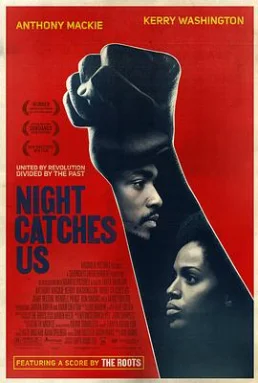
为了黑豹党 阿毛 philly来看的这部电影,没想到比我想象的更沉重也更复杂。从表面(且肤浅)的层次上看,有些人可能会觉得这并不是一部完全符合当下语境下政治正确的电影。但实际上这部电影关于“运动之后还剩下什么”的讨论很令人深思。
(And of course I wrote my musings in English as I finished watching a film in English…If I feel like it, I'll eventually translate this into Chinese, but for now just bear with me here.)
The discussion around the legacy of the Panthers is interesting, almost hinting at that the radicalism partly came from FBI's active instigative efforts. (Was the comic book part of COINTELPRO as well? Alongside all the threatening and surveillance and sabotaging.) Also it was interesting to have a Black FBI officer, actively planning sabotaging what was already the quieted-down aftermath of the movement. Again pointing out the systematic oppression. The state vs. the people.
There are two parts to the Panthers' legacy. One of course is Jimmy, an admirer of Panther ideals, clinging to the slogans, the berets, and eventually completing the full cycle by shooting at the cop. (Ngl the naivety in political movements and the imperative urge to fight and participate in something big and collective reminded me a bit of 红某兵…)
And the movie of course pointed out the danger of the radical and separatist ideology, and how it might in fact hurt Black people. We saw Jimmy's refusal to accept the reality, to recognize that the white aluminum can buyer was in the same class as him as well, struggling to make ends meet. He didn’t question the drop in price as a systematic, classist, social issue but rather take the easiest (albeit not always true) route and blame it as a racist act. The naivety of it was even observed by the kids when they commented on how Jimmy wanted "to do business only with the brothers now." Again…in some sense, this might not be the most "politically-correct-looking" movie on the superficial level.
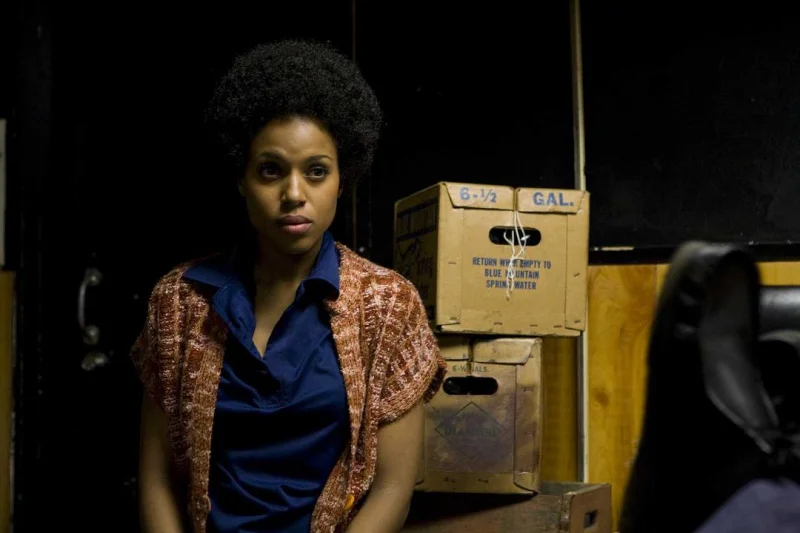
And the other part of the Panther’s legacy is of course Patricia, a former Panther herself and a widower as well, holding fundraisers for prison bails, bailing out kids on the streets, taking in the ones who needed a roof, hosting breakfasts for kids on the block, which still was one of the things that people remember about that activism and era to this day.
The movie also touches upon another complex concept, the “snitch," a class traitor, sold their soul to the police, someone who is to be condemned and ostracized in almost all activist narratives. Yet the movie showed us the other side of this complex issue, the real "snitch" was not Marcus “the best friend who might also be hitting on the wife”, but actually Patty, the wife herself AND a mother who wanted to put her life and her kid's life first.
When you no longer agree with parts of the movement and your own life is at stakes, what then comes of it? That’s the tough question the movie wanted to ask.
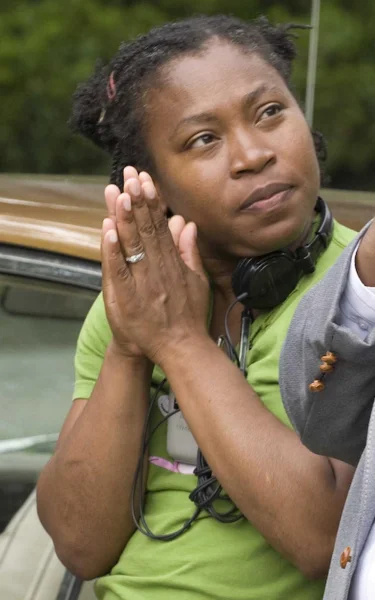
Last but not the least, shout out to Philly. I wish I actually took a course in undergrad and learned a bit more about civil rights in Philly, one of the hot hub of the movement back then. Shout out to the director Tanya for a beautiful feature film debut.
Anthony and Kerry also did great. The tenderness between the two and with Iris. They will make a good family. Must've been nice to work with Tariq and have The Roots do the music for the film. And for Anthony to be able to act alongside Wendell Pierce, another NOLA native who Mackie had said that was one of the people he looked up to in the industry for career plans, must’ve been nice.
Would be a lie to say I didn’t miss Philly after watching this film. Maybe it will come to my dream tonight.